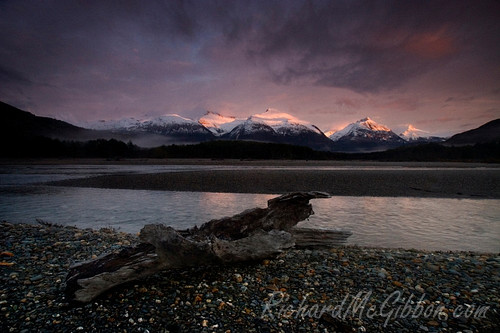
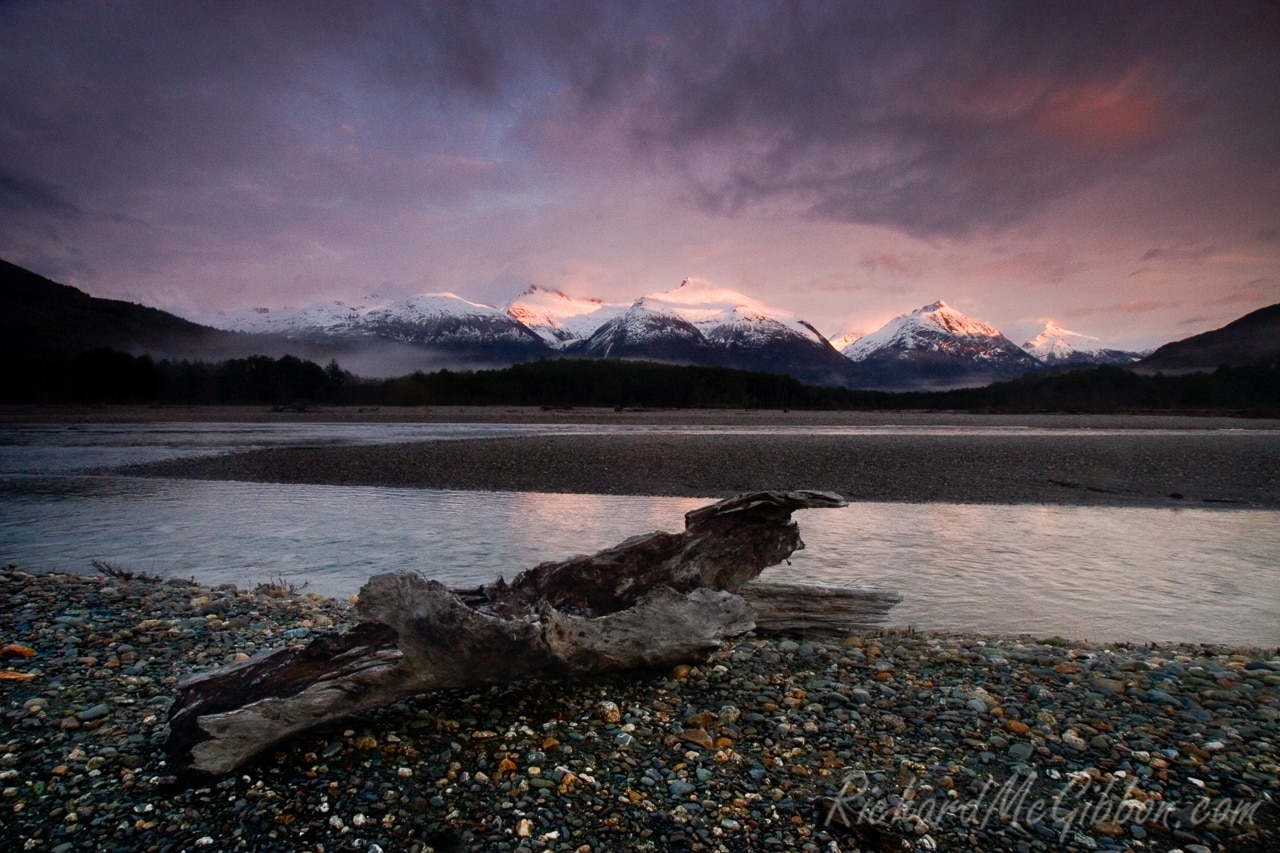
Sunrise from the banks of the Rio Baker near the Northern Icecap, Patagonia, Chile
Imagine driving down a single-track unsealed road, the only road through around for miles. No cars, no traffic. In the snow-capped mountains above large glaciers spill from a hidden icecap, one of the largest expanses of ice on the planet. Temperate rainforests cover the mountains’ lower slopes punctuated only by waterfalls spilling off the cliffs above and crashing their way into the valleys below. In the valleys fast flowing rivers surge, their waters a delicate azure from the remains of glacial debris, make there way out into fjords spectacular enough to rival those of Norway or New Zealand.
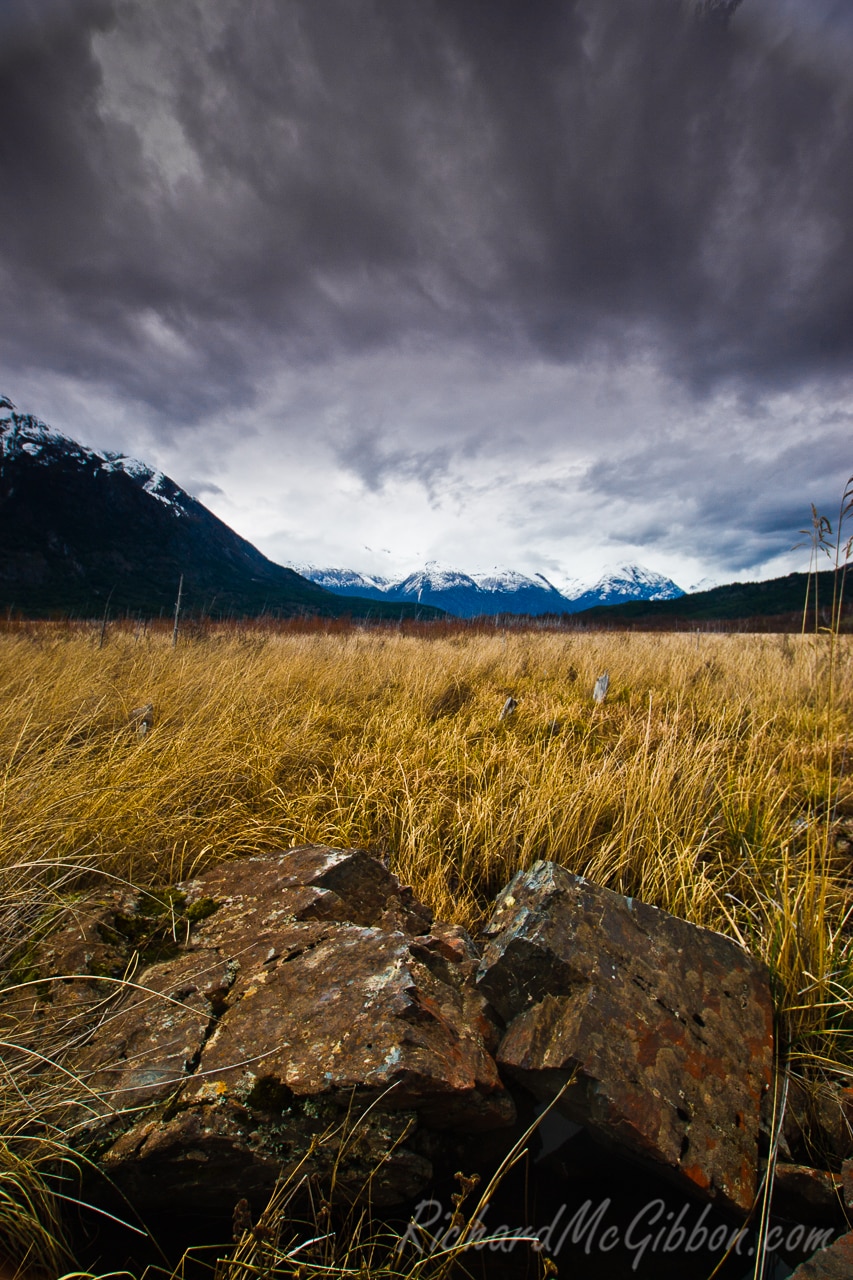
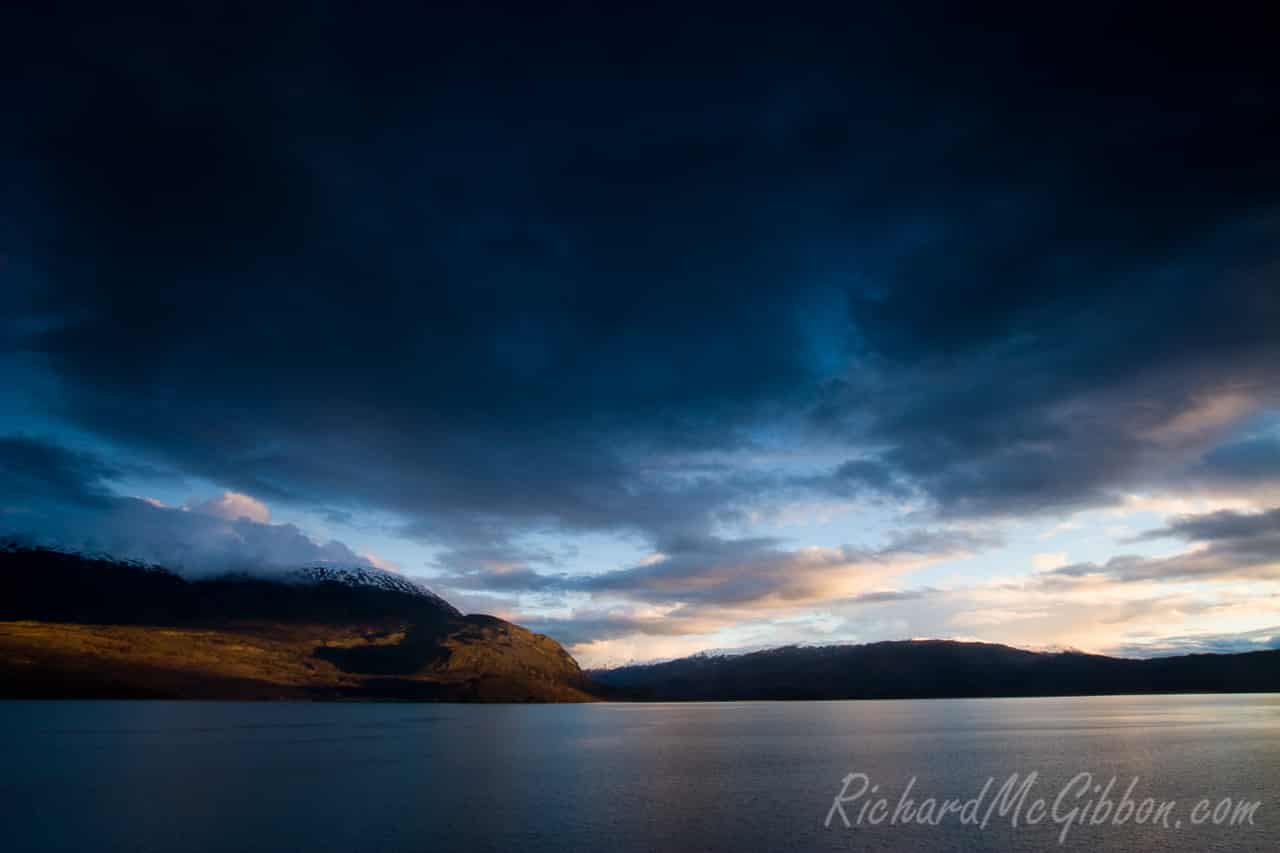
A storm builds over the Northern Icecap, Patagonia, Chile
A few years ago I had the pleasure of being able to travel with a group of friends through southern Chile, just such an area. This is the side of Patagonia that few travellers get to see as it is so isolated and the infrastructure for travelling here really doesn‘t exist. I have always I ranked it as one my favourite destinations.
In the last few years the area has become the centre of a heated debate regarding the construction of five dams on two of the regions major rivers, the Rio Baker and the Rio Pascua. The plans also include a clear-cut strip running for 2200kms to the north as a corridor for the power lines. This clear-cut strip will be the longest on the planet and run through some of Chiles most scenic landscapes.
On the side supporting the construction is HidroAysen, a conglomerate who now own the water rights which were privatised back during the rule of Pinochet’s fascist government. In its bid to sell the dams to the public HidroAysen have started a new advertising campaign which some claim is a “terror campaign”. In the campaign HidroAysen claim that without the dams Chiles power grid will soon be unable to handle the demands being placed upon it and, as a result, the country “will be left in the dark”.
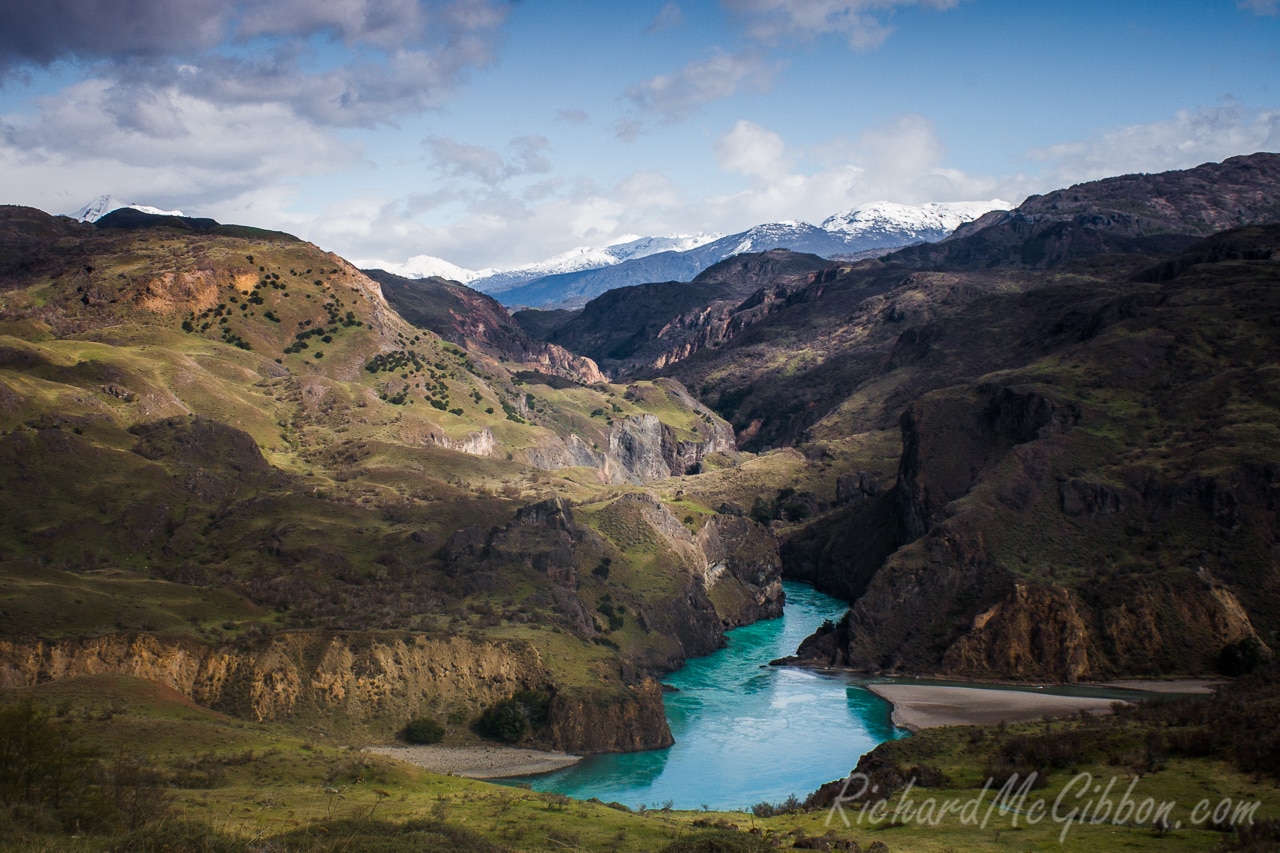
Just outside of Cochrane, RegionXI, Chile
Opponents say Chile has plenty of energy projects coming on line to satisfy future demand. They also argue that the project will irreversably damage one of the world’s few remaining wild places. Recent polls hve shown that the majority of Chile’s population is opposed to the construction. A study into HydroAysen’s environmental impact report has found more than 3000 deficiencies with the report. These include a failure to map exactly what area the reservoirs will cover, insufficient data on the impact of the local flora and fauna including the critically endangered Huemul estimated at only 3000 remaining and ignoring data regarding the seismic risks to the dams despite the existence of numerous fault lines and other unstable geology in the region.
While it is true that Chile may be facing an upcoming energy crisis other less destructive options are available to it. Chile is a country situated on the Pacific Ring of Fire and as such is high in volcanic activity. The possibility for geothermal energy is huge throughout Chile. It is one of the cleanest sources of energy, easily harnessed and abundant. The upper six miles of the Earth’s crust contains 50,000 times as much energy as found in all the world’s oil and gas reserves combined. Factories for geothermal energy can be built on a small localised scale thus minimising the size of the area affected to make power and doing away with such large scale clear-cuts. Around 24 countries are now converting geothermal energy into electricity. El Salvador, another country on the Ring of Fire, leads the way making 26 percent of its electricity from geothermal power.
One of the beautiful landscapes that await travellers who get off the beaten track in Chile’s Patagonia
It would be a great shame and a great loss to the world if this region of pristine wilderness was to be damaged for the unnecessary construction of the five dams. The worlds wilderness areas are shrinking and becoming more like isolated pockets. At what point will the governments stop and think through all the alternatives and decide on what is best for the planet and not for the pockets. Hopefully not before all is lost.
More shots of Chile can be found here
Sources:
- NY Times
- Patagonia Sin Represas
- The Patagonia Times
- HidroAysen
- International Rivers
- Grist
-
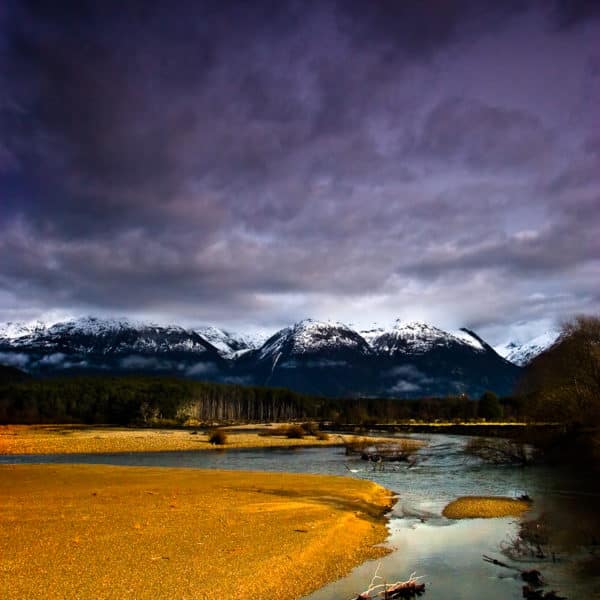
- The Rio Baker, Patagonia, Chile
-
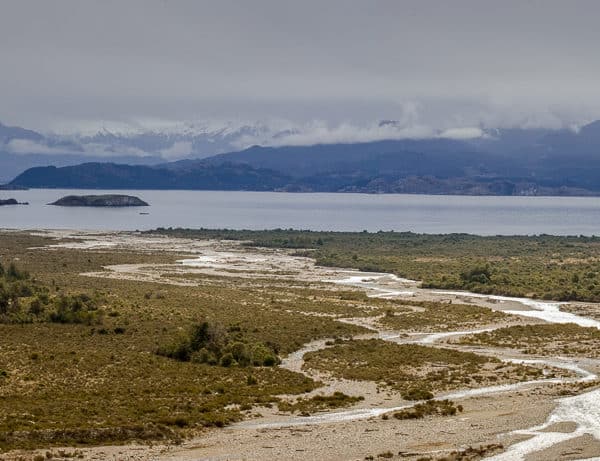
- A panoramic view across Lago General Carrera. Patagonia, Chile
-
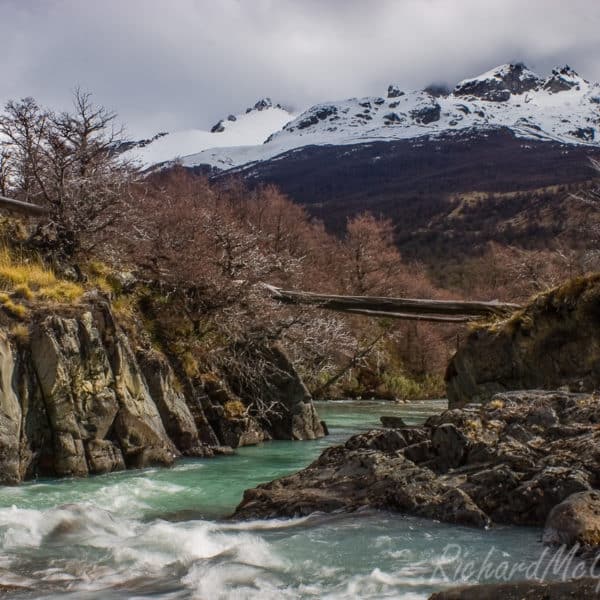
- A river crossing in the mountains around San Lorenzo, Patagonia, Chile
-
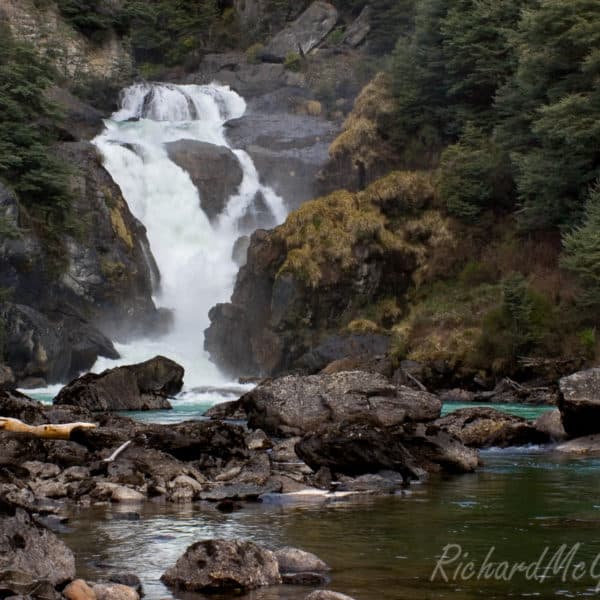
- A waterfall in the countryside around Cochrane in Southern Chile.
-
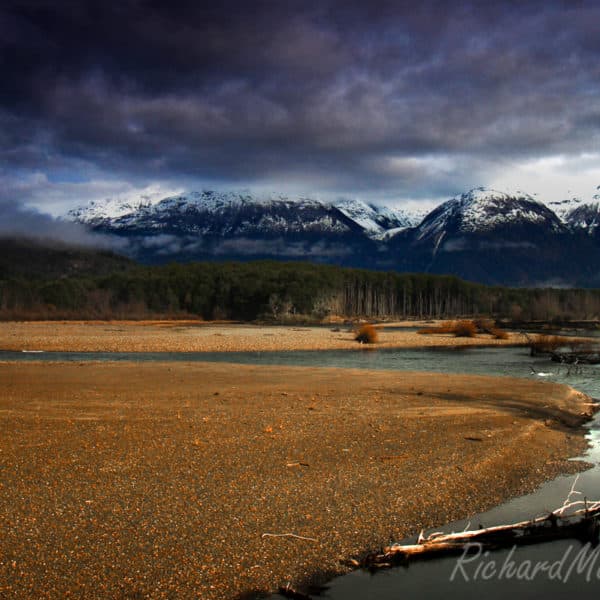
- Early morning by the Rio Baker in Southern Chile’s Patagonia


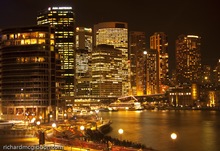 So here I am back in Australia. Well, I have actually been back here for a while now. Its been an interesting trip back home despite the fact that I haven’t really gone anywhere since I have been back. Its been raining a lot since I have been back this year which is great. If there was ever a country that actually needs rain it is Australia. The water reservoirs have been sitting on low for many years now and that country has been under constant water restrictions. The recent rainfall has bolstered the water supply a little. However if there was ever a country that suffers from mismanagement of its water supplies it has to be Australia. As soon as the level of the dams had risen slightly so too were the water restrictions eased. The levels in the dams were dangerously low, to the point where some of the capital cities had less than a years supply of drinking water left. The people here have become so used to living under water restrictions that surely it makes sense to leave the restrictions in place until the water levels have risen to a safe and comfortable point and there can be no danger in the immediate future.
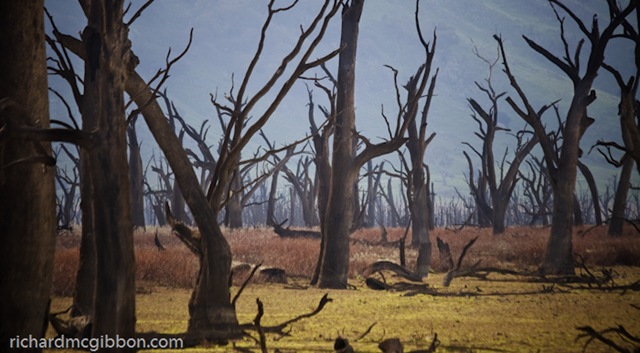
 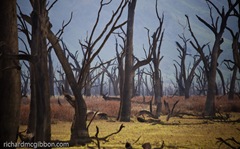 Above you can see a photo from the Hume Dam situated in the Snowy Mountain region. The trees that you see were a sunken forest covered by water when they built the dam and now exposed by the drought.